Choosing the best 250 ml foil container in 2026 requires more than comparing prices or shiny finishes. The container must match the food, filling process, storage temperature, and delivery route. A small tray may hold sauces, desserts, roasted vegetables, or laboratory samples. Each use creates different demands.
Industry data supports careful selection. Smithers’ report, The Future of Aluminium Foil to 2028, identifies rising demand for lightweight, portion-sized, and convenience-focused packaging. Grand View Research also reports continued growth in the global aluminium foil market, driven by foodservice, ready meals, and retail applications. However, market estimates vary between reports. That difference deserves attention, not blind confidence.
Material quality matters.
A reliable 250 ml foil container should have consistent wall thickness, clean forming, and a stable rim. These details reduce leaking, tearing, and lid failure during transport. Check whether the alloy suits acidic or salty foods. Review coating compatibility before using it with tomato sauce, citrus fillings, or oily meals. A container that looks strong can still fail at the corner.
Sustainability also belongs in the decision. The International Aluminium Institute explains that recycled aluminium can require substantially less energy than primary production. Yet recycling outcomes depend on local collection systems and contamination levels. “Recyclable” is not always the same as “recycled.” Buyers should request food-contact declarations, dimensional tolerances, recycled-content information, and test results from suppliers. These documents build trust. Hands-on trials remain essential. Fill the container, seal it, stack it, chill it, and inspect it after delivery. Small tests often reveal costly weaknesses.
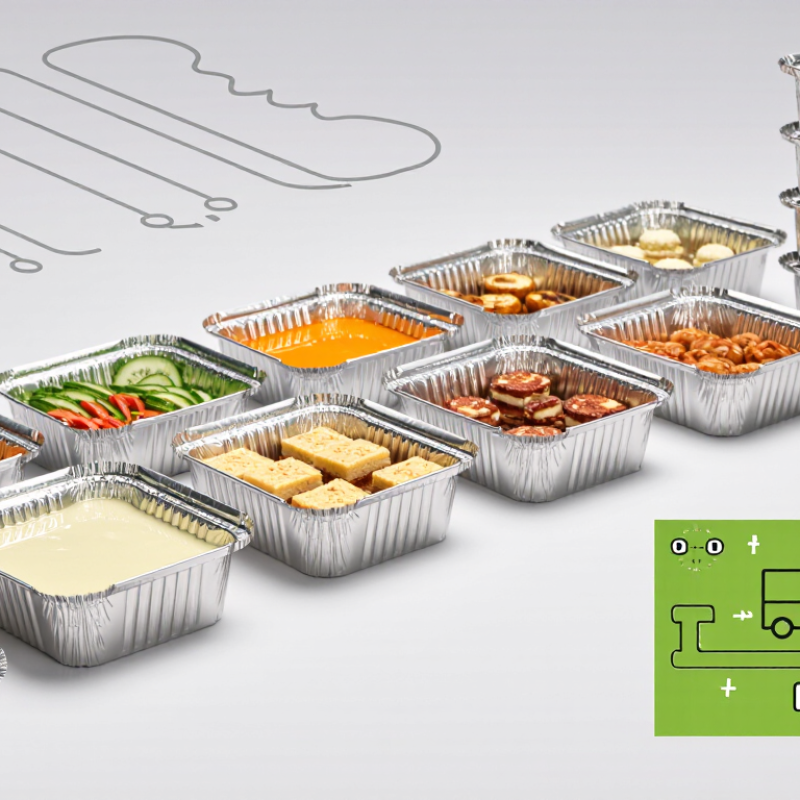
A 250 ml label does not always mean 250 ml of practical filling space. Confirm whether the figure describes brimful capacity, nominal capacity, or usable capacity. Ask for a technical drawing, not only a product photograph. Check the internal length, width, and depth with a ruler or caliper. Small changes in the base radius can reduce real volume.
For a reliable check, fill a sample with water at room temperature. Use a graduated cylinder or digital scale, since one gram of water is approximately one milliliter. Record the result at the intended fill line.
I once judged capacity by appearance and missed nearly 10 ml. That mistake was avoidable. Repeat the test across several pieces, because forming tolerances can create differences.
Headspace matters during sealing, transport, and heating. Leave enough room for expansion, surface movement, and a secure lid seal. The correct gap depends on the recipe, temperature, and closure design. Do not copy a random percentage. Request validated filling guidance and food-contact documentation from the supplier. A deeper container may hold the same volume but need more headspace. Test filled samples in realistic conditions. Measure after cooling, too. Real use is less tidy than the specification.
How to Choose the Best 250 ml Foil Container in 2026?
Choosing a 250 ml foil container starts with aluminum gauge, not appearance. A 30–50 μm wall keeps weight low and suits dry foods, snacks, and short transport. Thin foil saves weight. However, it can crease around the rim during filling or stacking. That small deformation may weaken the lid seal and create leakage risks.
For oily, moist, or heavier foods, a 60–80 μm gauge offers better rigidity. In practical packing tests, the container should resist bending when lifted from one edge. The rim must also stay even after pressing the lid. Uneven rims are easy to overlook. They can cause tiny gaps that allow liquid to escape. A 100 μm gauge provides the strongest structure, but it adds material weight and may increase handling costs.
The best choice depends on food density, filling temperature, transport distance, and stacking pressure. Test filled samples under real conditions, including refrigeration and vibration. Do not judge thickness by touch alone. Micrometer checks provide more reliable results than visual inspection. I have found that a slightly thicker container often prevents damaged meals, yet excessive thickness can be wasteful. Recheck the gauge after forming, because production pressure may reduce thickness at corners and sidewalls. Small errors matter.
A 250 ml foil container should be judged by compliance, not appearance. A bright surface proves almost nothing. Ask for alloy details, coating specifications, batch traceability, and intended-use limits. European Aluminium’s 2023 packaging report recorded approximately a 56% aluminium packaging recycling rate in Europe for 2021. Recycling performance matters, but it does not prove food-contact safety. Recycled input still needs controlled composition and documented testing.
Under EU Regulation 1935/2004, materials must not transfer substances that endanger health or change food composition, taste, or smell. Request a current Declaration of Compliance and migration-test results. Check hot, acidic, salty, and fatty food conditions. Also review relevant GMP documentation. In the United States, verify coatings, printing inks, lubricants, and adhesives against applicable FDA Parts 174–178 requirements. Part 177 may cover polymer components, while other substances may fall under Parts 175 or 178. One certificate rarely covers the whole container.
Tips: Match the test conditions to real use. Confirm oven temperature, storage time, and food acidity. Ask whether testing covered the finished container, not only raw foil. In supplier audits, paperwork is often the weak point. I would also inspect curled edges, pinholes, and coating scratches. These small defects can undermine otherwise credible compliance claims. Requirements change, and suppliers sometimes provide outdated files. Verify revision dates.
How to Choose the Best 250 ml Foil Container in 2026?
Check Oven and Freezer Ratings from −40°C to 250°C
A 250 ml foil container should match your real cooking temperature, not just its size. Check whether the manufacturer clearly rates it from −40°C to 250°C. The lower limit matters for frozen desserts, prepared meals, and long-term freezer storage. The upper limit supports baking, roasting, and reheating in a conventional oven. Read the fine print.
Do not assume every foil container handles the full range. Alloy thickness, folded edges, coatings, and lids can change performance. A reliable specification should identify oven use, freezer use, maximum temperature, and heating restrictions. Containers may tolerate 250°C, while plastic lids may not. Remove lids before heating unless their rating confirms otherwise.
In practical kitchen testing, place the filled container on a firm baking tray. This reduces bending when food becomes heavy or hot. Avoid moving a frozen container directly into a very hot oven. Thermal shock can cause distortion or leakage. My own mistake was trusting a familiar-looking container without checking its temperature label. It can bend. I now inspect the rim, base, and packaging before every batch. Also consider whether the container will hold oily sauces, acidic foods, or liquid fillings. Temperature ratings do not automatically confirm chemical compatibility. When information is incomplete, choose a lower-risk use and request written technical data.
Check oven and freezer reference temperatures from −40°C to 250°C.
The chart shows common temperature checkpoints for evaluating a 250 ml foil container: deep-freezer storage at −40°C, chilled storage at 4°C, room temperature at 23°C, and oven-use checkpoints up to 250°C. Confirm the container, coating, lid, and sealing materials against the supplier’s specification before use.
A 250 ml foil container looks simple, but small design choices affect cost. Compare the metal weight, wall thickness, lid fit, and carton density. A lighter container may reduce material cost. It can also bend during delivery. That creates waste and customer complaints. Request production samples before approving a large order. Test them with hot food, cold storage, stacking, and a 30-centimeter drop.
Sustainability needs a measurable baseline. The International Aluminium Institute reports that about 75% of all aluminium ever produced remains in use. This supports aluminium’s long-term circular value, but it does not guarantee every container gets recycled. Ask suppliers for recycled-content evidence, energy data, and clear recycling instructions. The IAI’s aluminium industry pathway reports also show that primary production remains highly energy-intensive. Recycled aluminium generally needs far less energy than primary production.
Cost comparisons should include more than the unit quotation. Add freight, lid compatibility, packing efficiency, damaged units, and disposal rates. A container weighing 9 grams may beat a 12-gram option on paper. Yet poor rigidity can erase the saving quickly. My own comparison often misses the cost of extra handling. That deserves scrutiny. A practical 2026 scorecard should combine price per usable container, grams of aluminium, recycled content, and documented recovery potential. The 75% in-use metric is useful, but incomplete. It measures aluminium’s persistence, not perfect circularity.