China Top 10 250 ml Foil Container Manufacturers?
Choosing a reliable 250 ml foil container manufacturer in China requires more than comparing prices. Product consistency, material quality, and practical export experience matter just as much. A suitable supplier should understand container dimensions, aluminum alloy selection, rim strength, and compatibility with sealing lids. These details affect filling speed, transport safety, and customer satisfaction.
This guide introduces ten Chinese manufacturers associated with 250 ml foil container production. The selection focuses on manufacturing capability, product customization, quality control, food-contact documentation, minimum order quantities, and overseas service. Factory experience can reveal useful differences. Some suppliers may offer advanced pressing equipment, while others may compete through flexible tooling or smaller trial orders. Samples still matter.
Look closely.
The ranking should not be treated as an official certification or permanent judgment. Supplier capabilities, certificates, production lines, and export policies can change. Buyers should verify current documents, inspect samples, and confirm specifications before placing an order. Questions about alloy grade, foil thickness, container weight, packaging, and sealing performance deserve written answers. A low quotation may hide tooling fees, limited tolerances, or weaker after-sales support.
This overview aims to support careful sourcing decisions through practical, verifiable criteria. It also recognizes a common weakness in supplier comparisons: public information is not always complete. Independent audits, factory communication, and batch testing remain valuable. With that caution, readers can compare China’s leading manufacturers more confidently and identify a partner suited to their market, application, and expected production volume.
Definition and Uses of 250 ml Foil Containers
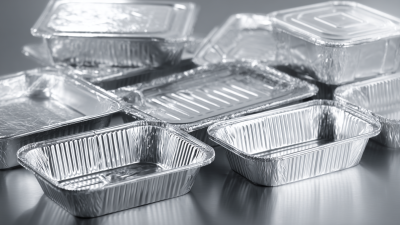
A 250 ml foil container is a small, lightweight vessel made from food-grade aluminum foil. Its nominal capacity is about one cup, although filling space may be slightly lower. The container usually has a shallow wall, a rolled rim, and a smooth interior. These details support easier filling, covering, and portion control. Aluminum transfers heat quickly and evenly, which helps with baking, roasting, reheating, and short-term chilled storage. It also blocks light and provides a useful barrier against moisture and oxygen. However, performance depends on foil thickness, shape, and the quality of the lid.
Small portions matter.
A 250 ml container suits individual desserts, prepared vegetables, sauces, snacks, and takeaway meals. Catering teams can use it to separate ingredients and reduce serving inconsistency. Home cooks often appreciate its light weight and easy stacking. When handling hot contents, users should place the container on a firm tray because thin foil can bend unexpectedly. It should not touch open flames or heating elements. Acidic or salty foods may react with aluminum during prolonged storage, especially when temperatures change. A paperboard sleeve or suitable lid can improve handling, but it may reduce visibility. Recycling options also vary by location, and leftover food should be removed before disposal. In practice, the “250 ml” label is only a guide; testing the actual filled volume prevents frustrating portion errors.
Criteria for Ranking China’s Top 10 Manufacturers
China Top 10 250 ml Foil Container Manufacturers
Ranking China’s top 250 ml foil container manufacturers requires more than comparing factory size. A credible review starts with verified production experience, not attractive website claims. Inspectors should examine forming lines, tooling maintenance, foil storage, and packaging areas. Details matter. Product quality depends on stable foil thickness, accurate dimensions, clean edges, and reliable sealing performance. Samples should undergo repeated checks for leakage, deformation, stacking strength, and heat resistance. Testing records must identify batch numbers and inspection dates.
Professional ranking also considers food-contact documentation, quality management systems, export experience, and customer complaint handling. Manufacturers with clear certificates and traceable records deserve greater confidence. Delivery performance should be measured through actual lead times, minimum order quantities, production capacity, and response speed during urgent changes. Technical support matters when buyers need custom lids, carton adjustments, or improved nesting efficiency. However, public information is often incomplete. A ranking based only on online claims can mislead readers. It is better to compare factory audits, independent test reports, sample results, and several buyer references. Pricing should receive limited weight because unusually low prices may reflect thinner material or weaker inspection controls. The final list should use transparent scoring, such as quality at 35%, compliance at 25%, delivery reliability at 20%, technical service at 10%, and commercial value at 10%. Scores should be reviewed regularly, because factory performance can change. No ranking is permanent.
China’s Top 10 250 ml Foil Container Manufacturers
China’s Top 10 250 ml Foil Container Manufacturers are often evaluated through production consistency, material control, and export experience. A reliable supplier should use food-grade aluminum, accurate wall thickness, and clean forming equipment. The 250 ml size suits bakery portions, prepared meals, desserts, and takeaway dishes. Small details matter.
The strongest manufacturers usually offer several rim designs, lid options, and surface finishes. Their factories may operate high-speed stamping lines, automated counting systems, and batch-based quality checks. Buyers should inspect container dimensions, sealing performance, stacking stability, and resistance to oven temperatures. Certificates for food-contact materials also deserve careful review. A polished website proves little.
Some manufacturers provide custom printing, carton design, and private packaging support. Others compete through lower minimum order quantities or faster sampling. Production capacity can vary during holiday periods, so written schedules are essential. Requesting samples from several of China’s top 10 suppliers can reveal uneven edges, weak rims, or inconsistent nesting. That is not always a failure, but it needs explanation.
A practical comparison should include aluminum alloy, temper, container weight, tooling fees, delivery terms, and inspection procedures. Experienced buyers should also confirm whether recycled material percentages affect strength or appearance. Claims about “top” manufacturers are not universal rankings. They depend on verified performance, communication, and the buyer’s application. Even careful evaluations can miss problems after large-scale production begins. A small trial order remains sensible.
China Top 10 250 ml Foil Container Manufacturers
| Rank |
Anonymous Manufacturer ID |
Main Production Region |
Standard Capacity |
Common Alloy |
Typical Wall Thickness |
Production Capability |
Food-Contact Compliance |
Export Market Coverage |
| 1 |
Manufacturer Profile 01 |
Jiangsu |
250 ml |
8011-H24 |
0.045–0.080 mm |
High-volume stamping |
China GB 4806 / EU 1935/2004 |
Asia, Europe, Middle East |
| 2 |
Manufacturer Profile 02 |
Zhejiang |
250 ml |
8011-H22 |
0.050–0.090 mm |
Automated forming lines |
FDA / EU 1935/2004 |
North America, Europe, Asia |
| 3 |
Manufacturer Profile 03 |
Guangdong |
250 ml |
8011-O / H22 |
0.040–0.075 mm |
Custom tooling available |
GB 4806 / LFGB |
Southeast Asia, Africa, Europe |
| 4 |
Manufacturer Profile 04 |
Shandong |
250 ml |
8011-H24 |
0.045–0.085 mm |
Large-format order support |
FDA / GB 4806 |
Europe, Middle East, South America |
| 5 |
Manufacturer Profile 05 |
Henan |
250 ml |
8011-H22 |
0.050–0.100 mm |
Integrated rolling and forming |
GB 4806 / EU 1935/2004 |
Asia, Africa, Eastern Europe |
| 6 |
Manufacturer Profile 06 |
Fujian |
250 ml |
8011-O |
0.045–0.080 mm |
Private-label packaging |
FDA / LFGB |
Asia-Pacific, North America |
| 7 |
Manufacturer Profile 07 |
Anhui |
250 ml |
8011-H24 |
0.050–0.090 mm |
Food-service container focus |
GB 4806 / EU 1935/2004 |
Europe, Asia, Middle East |
| 8 |
Manufacturer Profile 08 |
Hubei |
250 ml |
8011-H22 |
0.045–0.085 mm |
Short-run customization |
FDA / GB 4806 |
Southeast Asia, Africa |
| 9 |
Manufacturer Profile 09 |
Hebei |
250 ml |
8011-O / H24 |
0.050–0.095 mm |
Standardized export packing |
GB 4806 / LFGB |
Middle East, Africa, Europe |
| 10 |
Manufacturer Profile 10 |
Chongqing |
250 ml |
8011-H22 |
0.045–0.080 mm |
Flexible order quantities |
FDA / EU 1935/2004 |
Asia-Pacific, South America |
Data note: The table uses anonymous manufacturer identifiers and summarizes commonly specified market ranges for 250 ml aluminum foil containers in China. Actual alloy, thickness, certifications, tooling, capacity, and export coverage should be verified directly with each supplier before purchasing.
Product Quality, Customization, and Production Capabilities
China’s top 10 250 ml foil container manufacturers should be judged by evidence, not catalog claims. Product quality begins with consistent alloy, foil thickness, and forming control. Common container alloys include 8011 and 3003, selected for strength and drawability. A 250 ml container should show stable wall geometry, clean rims, and reliable lid fit. According to the International Aluminium Institute, recycling aluminium can save about 95% of the energy used for primary production. This makes scrap separation and material traceability useful quality indicators.
Customization reveals real engineering capability. Strong manufacturers can adjust dimensions, rim profiles, embossing, coatings, and packing formats without damaging production stability. Ask for tooling drawings and dimensional samples. A 0.01 mm thickness variation may affect stiffness and sealing performance. Food-contact documentation should identify material composition, coating specifications, migration testing, and batch traceability. The European Aluminium industry reports that packaging is a major aluminium application, but high demand does not guarantee careful process control.
Production capacity matters beyond monthly output. Review press tonnage, annealing control, automated inspection, mold maintenance, and defect rates. The China Nonferrous Metals Industry Association regularly highlights output scale and quality upgrading in China’s aluminium sector, yet factory figures may be self-reported. That deserves caution. An on-site audit or third-party inspection remains more reliable. No factory is perfect. Small dents, inconsistent curling, or delayed tooling can still appear during busy seasons. Buyers should compare samples from three production batches, not one attractive prototype. Auditable records matter more than impressive machinery photographs.
This benchmark summarizes commonly published specifications for 250 ml aluminum foil containers manufactured in China. Product quality reflects material consistency and food-contact compliance, customization covers tooling, shape, lid, and printing options, and production capability reflects automation, volume scalability, and delivery capacity. The values are normalized scores out of 100 and are intended for supplier comparison rather than certification.
How to Select the Right Chinese Foil Container Manufacturer
Choosing among China’s top 10 250 ml foil container manufacturers requires more than comparing online rankings. A polished website is not proof of stable production. Ask for a current factory profile, production capacity, quality certifications, and recent test records. Verify whether the manufacturer controls forming, printing, coating, and packing internally. Outsourcing may increase variation.
Request samples from at least three suppliers. Measure the container’s rim diameter, base strength, wall thickness, and actual 250 ml capacity. Check the lid fit by hand and test for leakage after heating and cooling. For food applications, review material declarations, coating specifications, and migration test reports for your target market. Documents should match the exact alloy and coating used in production, not a similar sample.
Pricing needs careful reading. A low quotation may exclude tooling, mold maintenance, inner packing, inspection, or transport. Confirm minimum order quantity, lead time, payment terms, replacement procedures, and batch traceability in writing. Ask how operators inspect curled edges, pinholes, dents, and sealing surfaces. I have learned that fast replies can hide weak follow-up. A slow but precise supplier may be safer. Still, communication delays matter. Test this before signing a contract. If possible, arrange a video audit or independent inspection during the first production run. Five cartons can reveal more than five promises.