
Top Aluminium Blister Packaging Manufacturers Worldwide
The global demand for reliable medicine packaging is expanding with pharmaceutical use, ageing populations, and more temperature-sensitive products. IQVIA Institute’s Global Use of Medicines 2024 report forecasts worldwide medicine spending will approach US$2.3 trillion by 2028. That growth creates pressure on packaging suppliers to deliver consistent protection, not merely attractive foil.
This guide examines leading aluminium blister packaging manufacturers worldwide through practical performance indicators. These include aluminium foil quality, pinhole control, forming depth, seal integrity, tooling capability, and production traceability. The Smithers report, The Future of Pharmaceutical Packaging to 2028, identifies compliance, sustainability, and material efficiency as major forces shaping pharmaceutical packaging decisions. Those factors matter on a real production line. A weak seal can expose tablets to moisture. A tiny foil defect may remain invisible during visual inspection.
Manufacturers should also demonstrate validated processes, documented quality systems, and experience with regulated pharmaceutical customers. GMP-aligned operations, supplier audits, stability testing, and batch-level records provide stronger evidence than marketing claims. Packaging formats must match the product, machine, climate, and distribution route. No supplier is ideal for every application.
Market rankings can be subjective. Reported market sizes also differ by research method and regional coverage. That limitation deserves attention. Therefore, this overview does not treat visibility as proof of technical superiority. It compares manufacturers using evidence, manufacturing depth, innovation, geographic reach, and customer support. Sustainability receives careful consideration, too, although recyclability depends on local collection and sorting infrastructure. Small details matter. And some conclusions may change as technologies and regulations evolve.
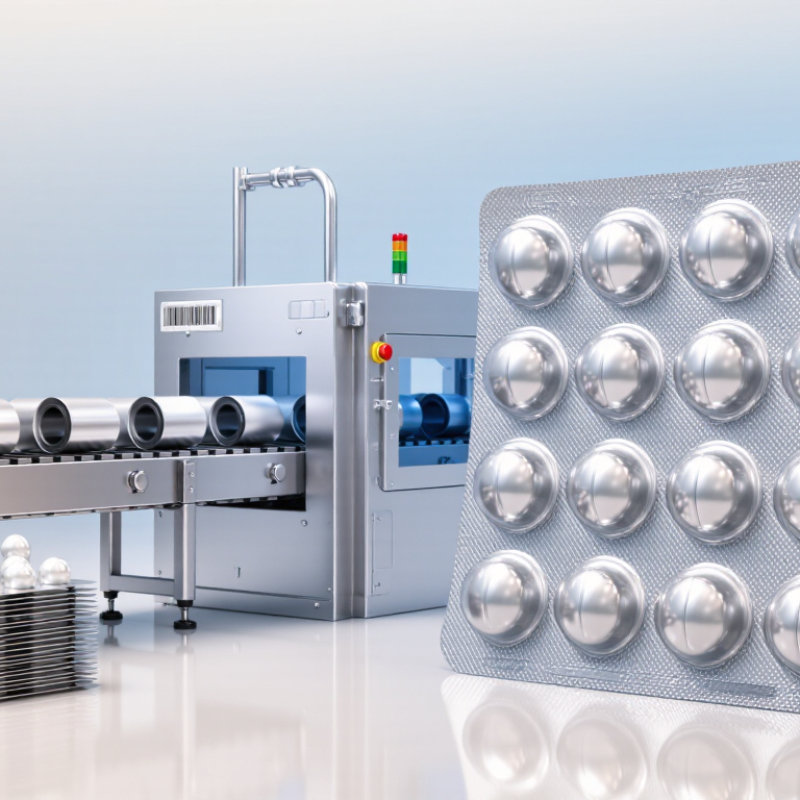
What Is Aluminium Blister Packaging?
Top Aluminium Blister Packaging Manufacturers Worldwide
What Is Aluminium Blister Packaging?
Aluminium blister packaging is a sealed pack made from formed aluminium foil and a protective lidding layer. Each cavity holds one measured product, often a tablet, capsule, or small medical component. The aluminium structure blocks light, moisture, oxygen, and external odors. That protection helps preserve product quality during storage and transport. It also creates clear portions for controlled use.
Manufacturers shape the base foil through cold forming or heat forming. Cold-form aluminium can create deep cavities without stretching the metal excessively. A sealing layer then bonds the lid to the formed pocket. Heat, pressure, and dwell time must remain consistent. Small variations may weaken the seal. That detail matters.
In practical quality checks, technicians inspect pinholes, wrinkles, edge alignment, and incomplete seals. They may use dye tests, vacuum tests, or seal-strength measurements. Good packaging should open cleanly without tearing into the product area. It should also resist crushing during handling. However, aluminium blister packaging is not automatically the most sustainable option. Its barrier performance is excellent, but layered materials can complicate recycling. This point deserves more attention. Packaging decisions should consider product sensitivity, filling equipment, transport conditions, and end-of-life infrastructure. A lower-material design may look efficient, yet fail if it cannot protect the contents reliably.
| Data Dimension | Typical Specification or Fact | Technical Explanation |
|---|---|---|
| Packaging Definition | Unit-dose packaging made with aluminium-based barrier materials | Aluminium blister packaging consists of individual cavities that hold a product and are sealed with a lidding material, commonly aluminium foil. It is widely used for tablets, capsules, medical devices and selected consumer products. |
| Basic Package Structure | Forming web, product cavity and lidding foil | A typical blister system includes a cavity-forming layer, the product inside the cavity, and a heat-sealable lidding layer. The forming web may be aluminium foil, plastic film or a laminate, depending on the required barrier level and forming method. |
| Common Aluminium Alloys | Soft or hard-temper aluminium foil grades | Pharmaceutical blister components commonly use aluminium foil grades selected for flexibility, pinhole control, heat-sealing performance and mechanical strength. The exact alloy and temper depend on the converting and sealing requirements. |
| Typical Forming-Foil Thickness | Approximately 20–30 micrometres for many cold-form applications | Cold-form aluminium blister structures often use relatively thick aluminium foil to create deep cavities and provide high barrier protection. Final thickness varies according to cavity depth, tooling and product specifications. |
| Typical Lidding-Foil Thickness | Approximately 20–30 micrometres before coating and printing | Lidding foil is commonly supplied with a heat-seal coating, primer, printing layer or protective varnish. The selected thickness must support push-through performance, machinability and reliable sealing. |
| Cold-Form Blister Technology | Aluminium laminate formed without heating the foil | Cold forming uses pressure to shape an aluminium laminate into cavities. It provides very high protection against moisture, oxygen and light, but generally requires more material and creates larger pack dimensions than thermoformed plastic blisters. |
| Thermoformed Blister Technology | Plastic forming web shaped with heat and pressure | Thermoforming uses heat to shape a plastic film, commonly with a lidding foil on top. It offers high-speed production, clear product visibility and efficient material use, while its barrier performance depends strongly on the selected plastic or laminate. |
| Moisture Barrier | Very high when an aluminium layer is continuous and defect-free | Aluminium is an effective barrier against water vapour. Actual performance depends on foil thickness, pinholes, laminate construction, seal integrity, cavity design and storage conditions. |
| Oxygen Barrier | Very high for properly laminated aluminium structures | A continuous aluminium layer can substantially limit oxygen transmission. In practice, the weakest points are often seals, pinholes, score lines, closures and damaged areas rather than the intact foil itself. |
| Light Protection | Near-total light protection for opaque aluminium structures | Opaque aluminium packaging protects light-sensitive products from ultraviolet and visible light. This can help reduce photodegradation when the package is correctly sealed and remains undamaged. |
| Product Protection | Individual cavities reduce handling and cross-contamination risks | Each dose is separated from the others until opening. This supports product identification, dose control and protection from repeated exposure to ambient air and humidity. |
| Common Applications | Tablets, capsules, diagnostic components and medical devices | Aluminium blister formats are frequently selected for pharmaceutical and healthcare products that require strong barrier protection, controlled dosing, tamper evidence or extended shelf-life support. |
| Sealing Method | Heat sealing with a compatible coating system | The lidding foil normally contains a heat-seal lacquer or polymer coating matched to the forming web. Sealing temperature, pressure, dwell time and clean sealing surfaces are critical for package integrity. |
| Opening Method | Push-through, peelable or peel-and-push opening | Push-through packs are opened by pressing the product through the lidding foil. Peelable systems are designed for users who need lower opening force, while peel-and-push designs can balance accessibility with child-resistant or senior-friendly requirements. |
| Typical Quality Tests | Leak testing, seal-strength testing and visual inspection | Manufacturers commonly evaluate seal integrity, foil appearance, pinholes, coating adhesion, dimensions, forming accuracy and opening performance. Test methods are selected according to the product, package design and applicable regulations. |
| Relevant Regulatory Framework | Pharmaceutical packaging and materials-contact requirements | Commercial production may need to comply with applicable regional rules for pharmaceutical packaging, good manufacturing practice, printed packaging components, extractables and leachables, and materials intended to contact products. |
| Manufacturing Process Stages | Rolling, annealing, coating, laminating, printing, slitting and inspection | Industrial aluminium blister material production typically involves foil manufacture or sourcing, surface treatment, coating or lamination, printing where required, slitting to production widths, quality control and conversion into blister packs. |
| Global Supplier Selection Criteria | Barrier performance, consistency, compliance and converting capability | When comparing manufacturers worldwide, buyers commonly assess foil quality, coating uniformity, pinhole control, seal performance, production capacity, documentation, traceability, regulatory support and compatibility with existing blister machinery. |
| Sustainability Consideration | Aluminium is recyclable, but blister recycling depends on local systems | Aluminium can be recycled repeatedly when it is collected and separated effectively. Multilayer blister packs may be more difficult to recycle because aluminium is bonded to polymers, coatings, inks and other materials. |
| Main Advantages | High barrier protection, product separation and compact unit dosing | Aluminium blister packaging can protect sensitive products from moisture, oxygen and light while supporting portability, traceability and controlled dispensing. |
| Main Limitations | Higher material use, limited product visibility and possible forming memory | Cold-form aluminium packs may require more packaging material and storage space. The opaque structure prevents visual inspection, and improperly designed cavities can affect machinability or pack appearance. |
Related Posts
-

10 Tips for Choosing Aluminium Blister Packaging?
-
Top Benefits of Aluminium Blister Packs for Global Buyers?
-
Top 10 Benefits of Using Aluminium Blister Packs for Pharmaceutical Packaging
-
2026 How to Choose the Best Aluminium Blister Packaging Solutions?
-

Best Aluminium Foil for Blister Packaging Options Available?
-

Top Benefits of Using Aluminium Blister Pack for Packaging Solutions?