
How to Choose Laminated Aluminium Foil Packaging?
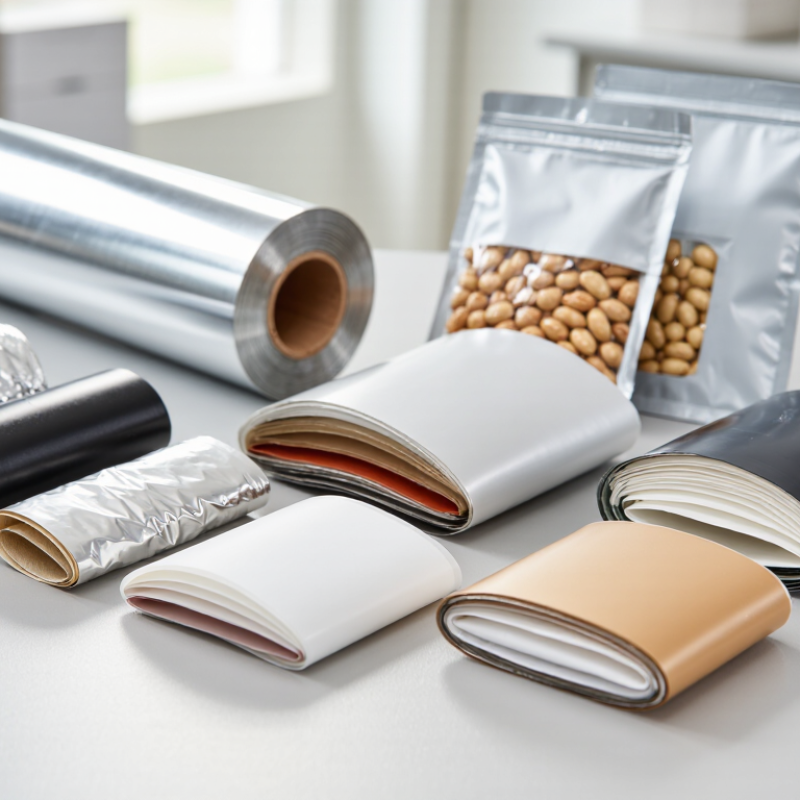
Choosing laminated aluminium foil packaging requires more than comparing prices or admiring a glossy finish. The structure may combine aluminium foil, polyethylene, polyester, paper, or other layers. Each layer affects barrier protection, sealing, stiffness, recyclability, and production performance. Grand View Research valued the global aluminium foil market at approximately USD 25.9 billion in 2022 and expects continued growth through 2030. Smithers also forecasts strong expansion in flexible packaging, supported by food, pharmaceutical, and personal-care demand. These figures suggest opportunity, but they do not make every laminate suitable.
Melissa Hockstad, president and CEO of the Flexible Packaging Association, states, “Flexible packaging uses less material, energy, and water than alternative packaging formats.” That advantage matters, yet it should not end the discussion. A laminate with excellent oxygen protection may create more difficult recycling conditions. A thin foil layer can block light and moisture, but a weak seal may still cause leakage. No laminate is perfect.
This guide examines practical selection points. Consider the product’s moisture sensitivity, oxygen exposure, filling temperature, shelf-life target, and distribution route. A snack pouch traveling through humid warehouses needs different protection from a sterile medical pack. Review technical datasheets, migration declarations, seal-strength results, and barrier testing. Ask suppliers how they control pinholes, wrinkles, adhesive curing, and layer consistency. The wrong choice can look acceptable on a sample roll, then fail beside a hot filling line. Good packaging decisions are evidence-based, but they still require careful reflection.
Define Product Requirements and Packaging Conditions
How to Choose Laminated Aluminium Foil Packaging?
Define Product Requirements and Packaging Conditions
Choosing laminated aluminium foil packaging starts with the product, not the pouch shape. Identify moisture sensitivity, oxygen exposure, light sensitivity, aroma loss, and expected shelf life. A dry powder may need strong moisture protection. An oily product may require inner-layer compatibility. Liquid contents demand reliable seals and resistance to leakage. Small details matter.
Measure the filling environment carefully. Record product temperature, filling speed, sealing temperature, and contact time. Check whether the package will face freezing, heating, vibration, or repeated handling. Aluminium foil can block light effectively, but poor sealing can still cause failure. Seal width, seal strength, and puncture resistance deserve practical testing.
Review the complete distribution route. Consider warehouse humidity, stacking pressure, transport distance, and retail display conditions. A packaging engineer should compare barrier data with real product trials. Laboratory results alone can miss problems. Use filled samples for drop, compression, aging, and seal tests. Keep test records and inspect rejected samples closely.
A first specification is rarely perfect. We once focused too much on barrier performance and overlooked opening convenience. The package protected the product well, but users struggled with it. Product safety remains essential, yet handling experience also affects packaging quality. Define requirements with production, quality, and logistics teams before choosing the final laminate structure.
| Product or Packaging Factor | Key Requirement to Define | Typical Target or Selection Guide | Suitable Laminated Foil Consideration | Why It Matters | Recommended Validation |
|---|---|---|---|---|---|
| Product sensitivity to moisture | Determine whether the contents absorb moisture, soften, clump, oxidize, or lose performance when exposed to water vapour. | Use a high-barrier structure when moisture protection is critical; many moisture-sensitive products require a very low water vapour transmission rate. | Aluminium foil laminated with a heat-sealable polymer layer and an appropriate supporting film or paper layer. | Aluminium foil provides an effective barrier against water vapour when it is continuous and free from pinholes, cracks, and defects. | Measure water vapour transmission rate according to ASTM F1249 or ISO 15106-3, using the intended package structure. |
| Oxygen sensitivity | Identify whether oxygen can cause rancidity, oxidation, colour change, nutrient loss, or product degradation. | Select a foil-based high-barrier laminate for oxygen-sensitive products, particularly where long shelf life is required. | Use a robust aluminium foil layer with a compatible adhesive and a properly sealed inner web. | Aluminium foil has extremely low oxygen permeability when the foil layer remains intact. | Test oxygen transmission rate according to ASTM D3985 or ISO 15105-2. |
| Light sensitivity | Assess whether ultraviolet or visible light may affect flavour, colour, vitamins, active ingredients, or chemical stability. | Choose an opaque aluminium foil laminate when light protection is required. | Use a foil layer rather than a transparent barrier film when complete light shielding is needed. | Aluminium foil blocks light across the ultraviolet, visible, and infrared ranges when the laminate is not damaged. | Conduct light-exposure and product-stability testing under the expected storage conditions. |
| Product form and filling temperature | Define whether the product is a powder, granule, tablet, liquid, paste, or hot-filled material. | Select the inner sealant according to contact conditions, filling temperature, viscosity, and chemical compatibility. | Polyethylene, polypropylene, or other sealant layers may be considered depending on the application and regulatory requirements. | The inner layer must provide reliable sealing without sticking, contamination, delamination, or chemical interaction. | Perform seal-strength, hot-tack, leakage, and product-contact compatibility tests. |
| Chemical compatibility | Review oils, fats, acids, alcohol, solvents, salts, essential oils, and other aggressive ingredients. | Choose an inner polymer that resists the product and does not extract or transfer undesirable substances. | Use a chemically resistant sealant and adhesive system selected for the actual formulation. | Incompatible materials may cause odour transfer, seal failure, swelling, brittleness, or migration. | Complete migration, extractables, storage-compatibility, and accelerated-ageing studies where applicable. |
| Required shelf life | Define the intended shelf life together with temperature, relative humidity, light exposure, and distribution conditions. | Common commercial shelf-life programs range from several months to more than two years, depending on the product. | Use a higher-barrier laminate and stronger seal system as shelf-life risk increases. | Barrier performance alone does not guarantee shelf life; seals, folds, pinholes, handling, and product stability are also critical. | Run real-time and accelerated stability studies in the final package format. |
| Aluminium foil thickness | Balance barrier performance, puncture resistance, flexibility, forming behaviour, and material consumption. | Typical foil layers may be approximately 6–50 micrometres, depending on the package design and performance target. | Thicker foil generally improves mechanical robustness, while thinner foil can reduce material use but requires careful handling and testing. | Foil barrier performance is excellent, but mechanical damage can create pinholes or cracks that reduce protection. | Check pinholes, tensile strength, tear resistance, flex-crack resistance, and package integrity. |
| Package format | Define whether the package will be a sachet, pouch, strip pack, lidding foil, tube laminate, or formed container. | Select the laminate according to forming depth, sealing geometry, opening method, and filling equipment. | Flexible formats generally require good fold, tear, seal, and puncture performance; formed formats require suitable elongation and forming strength. | A laminate designed for one package format may fail when used on another machine or with a different forming process. | Conduct machine trials using production-speed equipment and the intended filling conditions. |
| Seal temperature and dwell time | Define the available sealing temperature, pressure, dwell time, jaw design, and line speed. | The sealant must achieve a consistent hermetic seal within the operating window of the packaging machine. | Choose a sealant with suitable sealing initiation temperature, hot-tack performance, and contamination tolerance. | Insufficient heat or pressure can cause leaks, while excessive heat can distort the laminate or damage the product. | Establish a seal window using seal-strength, burst, dye-penetration, and leak tests. |
| Mechanical handling and distribution | Assess drop, compression, vibration, abrasion, stacking, carton handling, and transport distance. | Use a laminate with adequate puncture, tear, and flex-crack resistance for the distribution route. | Add a stronger outer film or supporting layer when the package will face sharp products, repeated flexing, or rough handling. | Transport damage can compromise foil continuity and seals even when the original package passes laboratory barrier tests. | Perform drop, vibration, compression, abrasion, and post-transport leak testing. |
| Temperature exposure | Define minimum and maximum temperatures during filling, storage, transport, and consumer use. | Select adhesives, inks, sealants, and films that remain stable across the complete temperature range. | Verify low-temperature flexibility and high-temperature seal stability for the expected distribution profile. | Temperature changes can affect seal strength, adhesive performance, laminate curl, brittleness, and product stability. | Use temperature-cycling, hot-storage, cold-storage, and humidity-conditioning tests. |
| Relative humidity exposure | Determine whether the package will be stored in humid warehouses, refrigerated areas, or tropical climates. | High-humidity distribution requires reliable seals, moisture-resistant outer layers, and controlled packaging storage. | Use a foil laminate with a suitable sealant and adhesive system; protect finished rolls from moisture before conversion. | Humidity can affect paper layers, adhesives, seal performance, print quality, and product moisture uptake. | Condition samples at the expected humidity and test barrier, seal strength, appearance, and leakage. |
| Opening and resealing requirements | Define whether the package must be tear-open, peelable, puncturable, or repeatedly resealable. | Choose a controlled-tear or peelable structure when easy and predictable opening is required. | Adjust film type, adhesive pattern, notch design, sealant, and laminate thickness to achieve the desired opening force. | A package that is too strong may be difficult to open, while a weak package may open during distribution. | Measure opening force, tear propagation, reseal performance, and package integrity after opening. |
| Regulatory and product-contact requirements | Identify the destination market, product category, contact conditions, and applicable food, pharmaceutical, or chemical packaging rules. | Use documented raw materials and a laminate suitable for the intended product-contact application. | Confirm compliance of films, adhesives, inks, coatings, and sealants; avoid unverified substitutions. | Compliance depends on the complete finished laminate and its conditions of use, not only on the aluminium foil. | Review declarations, migration data, specifications, certificates, and change-control procedures. |
| Print and appearance requirements | Define colour consistency, graphics, barcode readability, matte or gloss finish, and resistance to scuffing. | Use an appropriate printable outer layer and ink system compatible with lamination and distribution conditions. | Common outer layers include polymer films or paper, selected according to print quality and mechanical requirements. | Correct surface treatment and ink adhesion help prevent scuffing, odour, delamination, and unreadable variable data. | Test ink adhesion, rub resistance, barcode verification, colour consistency, and print durability. |
| Sustainability and end-of-life | Define material-reduction goals, recycling expectations, package-weight limits, and local waste infrastructure. | Compare barrier performance and material use against the actual recovery options available in the target market. | Consider downgauging only after confirming that barrier, seal, puncture, and shelf-life performance remain acceptable. | Multilayer structures can provide excellent protection but may be difficult to mechanically separate or recycle. | Complete a life-cycle, recyclability, or recovery assessment using the intended market’s infrastructure. |
Related Posts
-
Best Aluminum Foil Pouches for Global Buyers in 2026?
-
Exploring the Benefits of Laminated Aluminium Foil Packaging for Food Preservation
-

How to Use Aluminium Foil Paper for Food Packaging Effectively?
-

2026 Best Aluminium Foil for Pharmaceutical Packaging Innovations?
-
Best Aluminium Foil for Food Packaging Options in 2026?
-

Best Aluminium Foil for Food Packaging in 2026?