How to Choose the Best Aluminium Foil Pouch Supplier
Choosing the Best Aluminium Foil Pouch Supplier is not simply a search for the lowest quotation. It is a practical decision about product protection, production stability, and customer trust. A reliable supplier should understand moisture barriers, oxygen resistance, seal strength, pouch structure, and printing accuracy. Walter Soroka, author of Fundamentals of Packaging Technology, described packaging as “the science, art, and technology of enclosing and protecting products.” That definition remains highly relevant when evaluating an aluminium foil pouch manufacturer.
Look beyond a polished website. Ask for material specifications, production samples, test reports, and clear quality procedures. Examine the pouch closely. Are the seals even? Does the zipper close smoothly? Is the foil surface clean, without wrinkles, pinholes, or weak corners? These small details often reveal manufacturing discipline. The supplier should also explain its lamination process, adhesive controls, dimensional tolerances, and inspection methods in plain language.
Experience matters here.
A capable partner can recommend suitable foil thickness, barrier layers, and pouch formats for your filling process. They should provide realistic lead times, stable batch quality, and responsive technical support. Certifications may support credibility, but documents alone cannot prove daily performance. Request references or conduct a controlled trial before committing to large volumes.
Price still matters, of course. Yet the cheapest option may create leakage, rejected shipments, or expensive production delays. I have seen buyers focus heavily on unit cost and overlook communication failures. That approach is understandable, but incomplete. No supplier-selection checklist is perfect. Your decision should combine evidence, testing, communication, and a careful review of long-term reliability.
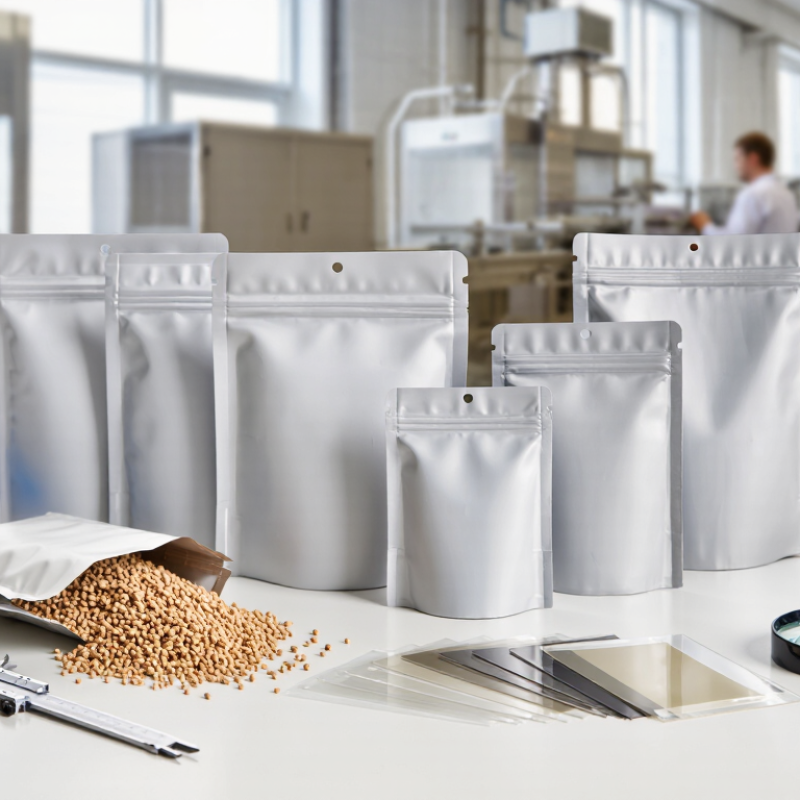
Define Your Aluminium Foil Pouch Packaging Requirements
Before comparing aluminium foil pouch suppliers, define what the pouch must protect. Identify the product, fill weight, shelf life, and storage environment. A dry powder needs moisture resistance, while an oily product may require stronger seal protection. Record whether the pouch will face sunlight, freezing temperatures, or repeated handling.
Measure the required width, height, gusset, and filling tolerance. Leave enough headspace for efficient sealing. Specify the opening style, tear notch, spout, zipper, or flat seal. Also describe the filling process and machine settings. A pouch that works on a test bench may wrinkle on a fast production line. Small details matter.
Ask suppliers to explain the material structure, foil thickness, seal strength, and barrier performance. Request test data for oxygen transmission, moisture transmission, drop resistance, and heat-seal consistency. Confirm whether the structure suits direct contact with the intended product and applicable packaging requirements. Printing needs should include artwork dimensions, color expectations, barcode clarity, and surface finish.
My early specifications were too general. That caused avoidable sampling delays. Now, I provide product samples, filling temperatures, storage conditions, and transport risks before requesting quotations. I also define acceptable defects, inspection methods, sampling quantities, and production lead times. A reliable supplier should question unclear requirements rather than simply promise a low price. Keep every approved drawing, material detail, and test result in writing.
Aluminium foil layers are commonly specified in gauges such as 7, 9, 12, and 20 micrometres. Thicker foil generally provides greater mechanical protection, while the final specification should also consider barrier performance, pouch size, filling method, sealing conditions, product weight, and required shelf life. Ask suppliers to confirm foil thickness tolerance, laminate structure, seal strength, pinhole control, and compliance documentation before comparing quotations.
Check Quality Standards, Certifications, and Product Testing
Choosing an aluminium foil pouch supplier requires more than comparing prices. Quality standards show how consistently the supplier controls materials, production, and records. Ask whether the facility follows a documented quality system, such as ISO 9001, and whether certificates are current and relevant to the pouch application.
Do not accept certificates at face value. Check the issuing body, certificate scope, expiry date, and covered production site. Food-contact pouches may also require migration testing and compliance documents for the intended market. A reliable supplier should provide material specifications, batch records, and a clear certificate of analysis. Details matter.
Product testing reveals practical performance. Request results for foil thickness, seal strength, puncture resistance, and dimensional stability. Barrier tests for oxygen and moisture are important when packaging sensitive products. Heat-seal tests should reflect your actual filling temperature and sealing pressure. Ask for samples from different production lots, not only one perfect sample. Real production varies.
I once reviewed pouches that looked excellent but opened unevenly after storage. The issue appeared only after temperature cycling. That experience changed my checklist.
Testing should include aging, transport vibration, and repeated opening when relevant. A supplier that welcomes audits and explains failed tests honestly is usually more dependable. Still, no certificate replaces independent verification. Perform your own inspection before approving full-scale production.
Assess Supplier Reliability, Communication, and Long-Term Support
Choosing an aluminium foil pouch supplier requires more than comparing prices. Reliability appears in small details: stable material thickness, clean seals, accurate dimensions, and repeatable delivery dates. Request recent production records, inspection reports, and physical samples from different batches. A supplier that explains variation honestly is often more trustworthy than one promising perfection.
Communication matters when specifications change. Ask how quickly the supplier answers technical questions, confirms artwork, and reports production delays. Clear communication should include named contacts, written approvals, and a traceable process for handling defects. During a factory review, I would check whether operators understand the agreed pouch structure, not just whether managers present polished documents. Sometimes the paperwork looks stronger than the actual process.
Long-term support should be tested before signing a large contract. Discuss sample revisions, packaging guidance, replacement procedures, and technical assistance after delivery. Reliable suppliers keep records and investigate recurring seal failures instead of blaming storage conditions immediately. I once underestimated response time during a small trial; the material was acceptable, but delayed answers disrupted planning. That mistake changed my evaluation method. I now measure support through actual requests, not promises. A short trial order, realistic questions, and one difficult specification can reveal more than a formal presentation.
How to Choose the Best Aluminium Foil Pouch Supplier - Assess Supplier Reliability, Communication, and Long-Term Support
| Supplier Profile |
Operating History |
Typical MOQ |
Standard Lead Time |
Sample Response Time |
Quality Certifications |
Pre-Shipment Quality Documents |
Communication Performance |
After-Sales Support |
Reliability Score |
Overall Assessment |
| Supplier Profile A |
More than 10 years |
10,000 pouches per design |
25–35 calendar days after artwork approval |
Within 1 business day |
ISO 9001; food-contact compliance documentation available |
Certificate of analysis, material structure confirmation, production inspection report |
Dedicated contact; clear quotations; weekly production updates |
Replacement or credit review for verified quality issues; technical support available |
9.1/10 |
Strong long-term partner |
| Supplier Profile B |
6–10 years |
20,000 pouches per design |
30–40 calendar days after artwork approval |
Within 1–2 business days |
ISO 9001; selected food-contact test reports |
Batch inspection report and basic material specifications |
Professional communication; updates provided at major milestones |
Formal complaint process; response target within 3 business days |
8.3/10 |
Reliable for established orders |
| Supplier Profile C |
3–5 years |
5,000 pouches per design |
20–30 calendar days after artwork approval |
Within 1 business day |
Food-contact declarations available; certification scope should be verified |
Material specification sheet; inspection documents available on request |
Fast replies; occasional inconsistency between sales and production information |
Flexible adjustment support; limited formal corrective-action documentation |
7.4/10 |
Suitable for smaller test orders |
| Supplier Profile D |
More than 10 years |
30,000 pouches per design |
35–45 calendar days after artwork approval |
Within 2–3 business days |
ISO 9001; documented food-contact compliance system |
Certificate of analysis, lot traceability records, inspection report |
Structured communication; slower response during peak production periods |
Dedicated claims procedure; documented corrective and preventive actions |
8.7/10 |
Strong production control |
| Supplier Profile E |
1–3 years |
3,000 pouches per design |
25–40 calendar days after artwork approval |
Within 1–2 business days |
Basic compliance documents; third-party verification recommended |
Basic material specifications; limited lot-level documentation |
Responsive during quotation stage; project follow-up needs confirmation |
Informal support process; escalation contacts should be agreed in writing |
6.8/10 |
Cost-effective but requires closer monitoring |
| Supplier Profile F |
6–10 years |
15,000 pouches per design |
28–38 calendar days after artwork approval |
Within 2 business days |
ISO 9001; food-contact reports available for common materials |
Pre-shipment inspection report and production batch information |
Consistent email communication; limited technical consultation |
Standard replacement policy; spare production capacity available for urgent reorders |
8.0/10 |
Balanced option for repeat purchasing |
Evaluation benchmark: Scores are based on supplier verification criteria including documented quality systems, response speed, lead-time consistency, traceability, complaint handling, and continuity of support. Actual performance should be confirmed through samples, references, audits, and written commercial terms.