Fam Ti

How to Choose Aluminium Foil for Blister Packaging

Choosing aluminium foil for blister packaging is a technical decision, not a simple thickness comparison. The foil must protect products from moisture, oxygen, light, and contamination. It must also run smoothly through forming, printing, sealing, and cutting equipment.

Experienced packaging teams usually assess alloy, temper, thickness, pinhole performance, surface cleanliness, and coating compatibility. Common alloys such as 8011 and 8079 can offer different balances of strength and formability. A harder foil may resist handling damage, but it can require more forming force. A softer foil may form easily, yet it may wrinkle during production. Small details matter. A clean seal matters most.

Dr. Stefan Glimm, former Director General of the European Aluminium Foil Association, stated, “Aluminium foil does not lose its properties during recycling.” This principle supports careful material selection and responsible lifecycle planning. However, recyclability alone does not solve every packaging problem. Coatings, laminates, inks, and local recycling systems also deserve attention.

A reliable specification should connect laboratory results with real production experience. Ask suppliers for certificates, test data, sample rolls, and sealing trials. Check the foil under actual machine speed and storage conditions. A roll may look excellent but still produce weak seals. That is an uncomfortable lesson.

This guide explains how to compare aluminium foil for blister packaging by barrier needs, mechanical performance, sealing structure, quality controls, and sustainability considerations. It also highlights common selection mistakes. The best choice is rarely the cheapest roll. It is the foil that protects the product consistently, runs efficiently, and supports responsible packaging decisions.
How to Choose Aluminium Foil for Blister Packaging

Understanding Aluminium Foil’s Role in Blister Packaging

How to Choose Aluminium Foil for Blister Packaging

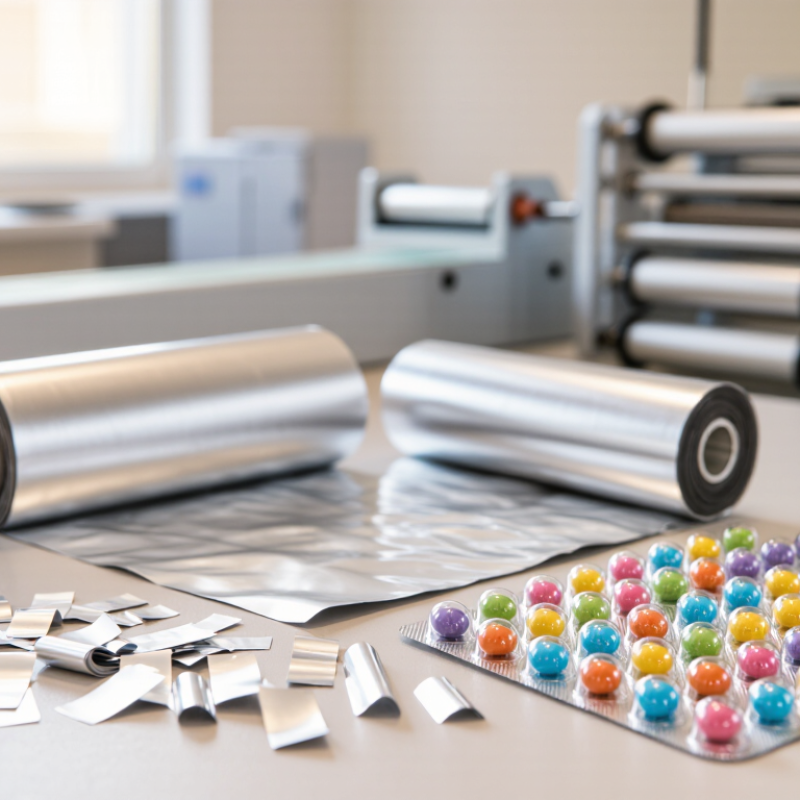
Understanding aluminium foil’s role in blister packaging begins with protection. The foil blocks moisture, oxygen, light, and unwanted odors. This helps preserve tablets during storage and transport. It also forms the lidding surface that seals against the plastic or aluminium cavity. A stable seal matters. Weak seals may allow moisture to enter, even when the foil looks flawless.

Material selection should match the product and packaging line. Common pharmaceutical foil thicknesses range from about 20 to 25 microns. Thicker foil can improve strength, but it may increase forming and material costs. Hard-temper foil usually supports clean printing and reliable handling. The heat-seal coating must suit the forming material, sealing temperature, and production speed. Small differences can affect peel strength and seal appearance.

In practical trials, inspect pinholes, wrinkles, coating coverage, and edge damage. Test samples after heat, humidity, and transportation exposure. A foil that performs well in a dry laboratory may behave differently on a fast production line. I have seen attractive samples fail because the sealing window was too narrow. That result is easy to overlook. It deserves another trial. Operators should also check opening force, print adhesion, and foil flexibility. No foil choice is perfect. The best option balances barrier performance, seal integrity, machine compatibility, and consistent quality.

Identifying Product Protection and Barrier Requirements

How to Choose Aluminium Foil for Blister Packaging

Product protection starts with the barrier requirement, not the foil grade. Aluminium foil can block light, oxygen, and moisture when it remains continuous and properly sealed. The European Aluminium Foil Association reports that common blister lidding foil is often around 20–25 micrometres thick. Thickness helps, but it does not eliminate pinholes, cracks, or seal defects. I would not choose foil by thickness alone.

For moisture-sensitive tablets, development teams often set a water vapour transmission target below 0.1 g/m²/day at 38°C and 90% relative humidity. This value should be verified using recognised methods, such as ASTM F1249 or USP <671>. The correct barrier depends on the product’s sensitivity, shelf life, and storage climate. A highly hygroscopic tablet may need a stronger barrier structure than a stable solid dose. Light-sensitive contents also require opaque coverage, especially during warehouse exposure.

Seal performance matters just as much. The Smithers report, The Future of Pharmaceutical Packaging to 2028, identifies product protection and packaging integrity as continuing priorities in pharmaceutical packaging development. In practice, I check seal strength after forming, transport simulation, and accelerated stability testing. A small forming crack can defeat excellent foil. That is easy to underestimate. Humidity, tooling pressure, and coating compatibility can also change results. Testing should reflect real distribution conditions, not only a clean laboratory environment.

Selecting Foil Thickness, Alloy, and Surface Treatment

Choosing aluminium foil for blister packaging begins with thickness. European Aluminium packaging guidance commonly places pharmaceutical blister foil near 20–25 micrometres. Around 20 micrometres can reduce material use and forming force, but it demands tighter control of pinholes and handling damage. For moisture-sensitive tablets, 25 micrometres offers a more forgiving barrier. ASTM B479 also emphasizes foil quality, surface condition, and freedom from critical defects. A thinner option is not automatically efficient.

Alloy selection affects forming, strength, and sealing performance. Alloy 8011 is widely used for standard push-through structures because it balances ductility and cost. Alloy 8021 may suit deeper cavities or higher forming demands, especially when elongation and barrier reliability matter. Ask for certificate data, including thickness tolerance, tensile strength, elongation, and pinhole results. Numbers reveal more than a supplier’s general claim.

Surface treatment deserves equal attention. The printed side needs controlled cleanliness and suitable primer adhesion. The cavity side normally receives a heat-seal lacquer matched to the forming web, sealing temperature, and dwell time. European Aluminium technical data indicates that clean, properly coated foil supports consistent barrier performance, while scratches can become leakage paths. Check coating weight, wetting, seal strength, and residual solvents during validation. The first specification is rarely perfect. Production humidity, tooling pressure, and tablet dust can expose weaknesses that laboratory tests miss.

Matching Foil Properties with Blister Forming Methods

Choosing aluminium foil for blister packaging starts with the forming method, not the foil roll. Cold-forming uses pressure to shape a deeper pocket, so the laminate needs stronger aluminium and controlled elongation. Common structures use aluminium around 120–160 micrometres thick. The thicker layer reduces cracking around sharp pocket corners. It also increases material consumption. That trade-off is easy to overlook.

Thermoforming places different demands on the pack. The plastic web creates the pocket, while aluminium usually acts as the lidding layer. Foil between 20 and 30 micrometres often supports clean sealing and reliable machine feeding. According to the European Aluminium Foil Association, pharmaceutical foil selection must consider pinholes, temper, thickness tolerance, and sealing performance. A 2024 Smithers pharmaceutical packaging analysis also identifies barrier protection and machinability as major purchasing criteria. The data supports a practical point: barrier value means little if the foil wrinkles during high-speed production.

Moisture-sensitive tablets may need a cold-form structure because aluminium provides an exceptionally strong barrier against light, oxygen, and water vapour. However, forming depth, seal temperature, and coating compatibility still require validation. ASTM F1249 testing can measure water vapour transmission through the finished structure. In production trials, inspect corner cracking under magnification, not only visual appearance. I have seen acceptable-looking pockets fail after transport. That assumption was too simple. A small forming-radius change can matter more than a thicker gauge. Select the foil after matching pocket geometry, press force, sealing conditions, and the product’s stability data.

How to Choose Aluminium Foil for Blister Packaging

Matching foil thickness with blister forming methods

Thermoformed PVC/PVDC blisters
A 20–30 μm aluminium lidding foil is commonly used because the formed plastic cavity provides the mechanical shape and support.
Cold-formed aluminium blisters
A thicker 45–60 μm aluminium forming foil is typically selected to withstand forming pressure and reduce the risk of cracking or pinholes.
Selection principle
Choose the thinnest foil that satisfies forming depth, barrier performance, seal integrity, machinability and required protection from moisture and light.

Typical industry thickness ranges are shown for comparison. Final specifications depend on cavity geometry, alloy, temper, coating system, sealing conditions and product requirements.

Checking Compliance, Printing, Sealing, and Supply Standards

Aluminium foil for blister packs must satisfy compliance before appearance. Check the supplier’s certificate of analysis, batch traceability, alloy, temper, thickness, and pinhole limits. ISO 15378 supports quality management for primary packaging materials used with medicinal products. Regional drug-contact requirements still apply. Do not guess. The WHO reports that about one in ten medicines in low- and middle-income countries may be substandard or falsified, making packaging control a serious supply issue (WHO, Global Surveillance and Monitoring System Report, 2017).

Printing needs more than sharp graphics. Confirm ink suitability, surface treatment, adhesion, and migration controls. A reverse-printed structure can protect the image during handling. Ask for rub-resistance results after forming and sealing. Tiny scratches around the batch code can weaken traceability. This is often missed during artwork approval.

Sealing performance depends on lacquer compatibility with the blister base, sealing temperature, dwell time, and pressure. Test peel strength, channel leaks, and seal integrity using validated methods, including ASTM F88 where appropriate. Check results after humidity and temperature conditioning. The International Aluminium Institute states that recycled aluminium uses about 5% of the energy required for primary aluminium production. Therefore, recycled content may support supply goals, but it must not compromise cleanliness or consistency. Require agreed width tolerances, minimum order quantities, lead times, and change-notification rules. Supply plans look perfect on paper. Reality is less tidy.

How to Choose Aluminium Foil for Blister Packaging - Checking Compliance, Printing, Sealing, and Supply Standards
Evaluation Area Key Parameter Practical Specification or Target Recommended Verification Selection Notes
Regulatory Compliance Intended-use compliance Confirm suitability for pharmaceutical, nutraceutical, food, or medical-device packaging before approval. Review the supplier’s declaration of compliance, technical data sheet, safety data sheet, and change-control procedure. Requirements vary by destination market. Compliance documentation should cover the foil, coating, primer, ink, adhesive, and lacquer system as applicable.
Quality System Manufacturing and traceability Lot-based production records with traceable raw material, coating, printing, and slitting information. Audit the quality system and check certificates of analysis or conformity for each shipment. For pharmaceutical packaging, supplier change notification and retained samples are important controls.
Foil Construction Aluminium alloy and temper Common blister grades include 8011 or 8079 aluminium alloy; temper is selected according to forming, lidding, and sealing requirements. Verify alloy and temper through the material certificate and, when required, independent chemical or mechanical testing. Hard-temper foil is commonly used for lidding applications, while cold-form blister structures require a foil grade and temper suitable for deep drawing.
Foil Thickness Gauge and tolerance Typical lidding foil thickness: approximately 0.020–0.025 mm. Cold-form blister foil is commonly about 0.045–0.060 mm before lamination. Measure thickness using a calibrated micrometer at multiple points across the web and along the production direction. The correct gauge depends on required barrier performance, forming depth, machine settings, seal design, and package stiffness.
Barrier Performance Moisture, oxygen, and light protection Aluminium foil provides a near-total barrier when it is continuous and free from pinholes, cracks, and channel leaks. Inspect pinholes and perform water-vapour or oxygen transmission testing on the complete blister structure when applicable. Barrier performance must be assessed after printing, laminating, forming, and sealing because converting processes can create defects.
Surface Quality Pinholes, scratches, wrinkles, and contamination The web should be clean, dry, uniform, and free from visible holes, tears, oil stains, heavy scratches, and excessive wrinkles. Use visual inspection under controlled lighting plus a defined defect catalogue and sampling plan. Critical defects should be classified separately from cosmetic defects. Acceptance limits should be agreed before mass production.
Printing Ink location and print quality For lidding foil, reverse printing on the non-product-contact side is commonly preferred; print registration should match the blister tooling and artwork. Check colour, registration, legibility, barcode readability, rub resistance, and print-to-seal-area positioning. Keep ink and varnish out of the heat-seal area unless the sealing system is specifically designed and validated for that construction.
Ink and Migration Control Product-contact safety Use an ink, primer, adhesive, and protective lacquer system suitable for the intended regulatory market and application. Review migration or extractables information where required and confirm that the product-contact layer is appropriately specified. Printing on the reverse side reduces direct contact risk, but it does not eliminate the need for a complete packaging-material assessment.
Heat Sealing Sealant compatibility The heat-seal lacquer must be compatible with the forming web, commonly PVC, PVC/PVdC, or other approved blister substrates. Conduct seal-window trials using the actual substrate, sealing plate, dwell time, pressure, and production-line speed. A typical development temperature range may be approximately 150–220 °C, but the validated operating window must be established for the specific coating and equipment.
Seal Integrity Peel strength and leak resistance The seal should be continuous, uniform, and strong enough to protect the product while allowing the intended opening behaviour. Test seal strength, visual seal quality, dye penetration or vacuum leak performance, and opening characteristics on finished blisters. There is no single universal peel-strength value for every blister design. Set limits through development studies, risk assessment, and product stability requirements.
Dimensions Width, length, core, and roll build Dimensions must match the blister machine, artwork repeat, sealing tooling, and automatic splicing or roll-change system. Measure web width, roll length, outer diameter, core size, winding direction, and joint frequency against the purchase specification. Dimensional accuracy helps prevent web tracking problems, print-registration errors, and unplanned machine stoppages.
Mechanical Handling Unwind behaviour and web flatness The foil should unwind smoothly without telescoping, blocking, excessive curl, edge damage, or coating transfer. Run a production-speed trial and inspect roll hardness, edge alignment, splice quality, and web tension response. Storage humidity, roll orientation, and conditioning time can affect foil handling and should be defined for the site.
Packaging and Storage Protection from moisture and damage Use protective outer packaging with clean, dry, impact-resistant handling and clearly identified lot information. Inspect incoming rolls for crushed edges, wet packaging, corrosion, contamination, and missing labels. Store in a clean, dry area away from chemicals and direct sunlight. Allow rolls to reach the converting-room temperature before use.
Supply Standards Consistency and delivery reliability Define approved specifications for gauge, alloy, coating weight, print, roll dimensions, tolerances, and acceptance criteria. Monitor incoming quality, on-time delivery, complaint rate, lot-to-lot variation, and supplier corrective-action performance. A lower unit price may be offset by higher scrap, slower line speeds, sealing failures, or additional inspection costs.
Final Qualification Packaging-line and stability validation Approve the foil only after successful machine trials, seal testing, barrier evaluation, transport assessment, and product stability review. Use representative production lots and document operating limits, test methods, sampling plans, and release criteria. The final choice should be based on the complete blister system rather than aluminium foil properties alone.