Fam Ti

10 Best Aluminium Foil for Cigarette Packaging Suppliers

Choosing the right aluminium foil for cigarette packaging requires more than comparing thickness or price. The foil must protect aroma, resist moisture, support clean printing, and run smoothly through high-speed packaging equipment. A reliable supplier should also provide consistent alloy quality, accurate temper control, and documented compliance with relevant packaging regulations.

Dr. Wolfgang Schaefer, an aluminium packaging specialist, observes, “Barrier performance matters only when it survives converting, printing, and storage.” This practical point deserves attention. A foil may perform well in laboratory testing, yet wrinkle during folding or lose adhesion during lamination. Small defects can create larger problems on a production line.

This guide reviews ten notable suppliers of aluminium foil for cigarette packaging. It considers foil gauge, pinhole control, surface finish, lacquer and adhesive compatibility, minimum order quantities, technical support, and delivery reliability. It also examines recycled-content claims, because environmental statements need evidence, not attractive wording.

Details matter here.

Readers should compare suppliers by application, not reputation alone. One manufacturer may offer excellent embossed foil, while another may provide better laminated structures or shorter lead times. Some profiles may be incomplete, since supplier capabilities and certifications can change across regions. That limitation should encourage careful verification.

Before placing an order, buyers should request current technical data sheets, compliance documents, sample rolls, and production references. They should also confirm whether the supplier supports lawful, regulated packaging markets and responsible material sourcing. A strong supplier does not merely sell foil. It helps prevent waste, downtime, and inconsistent pack quality.
10 Best Aluminium Foil for Cigarette Packaging Suppliers

What Makes Aluminium Foil Suitable for Cigarette Packaging

10 Best Aluminium Foil for Cigarette Packaging Suppliers

What Makes Aluminium Foil Suitable for Cigarette Packaging

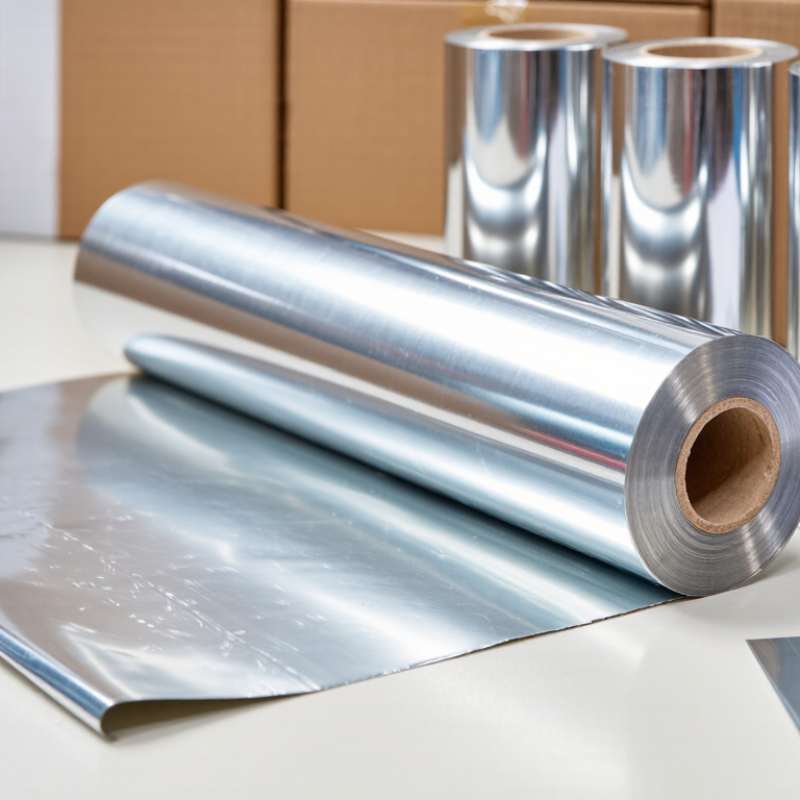
Aluminium foil creates a strong barrier against light, oxygen, moisture, and aroma transfer. These properties help protect product freshness during storage and transport. Its smooth surface also supports clear printing and consistent lamination. Very thin foil can still deliver strong protection, which reduces package weight and material use.

The International Aluminium Institute reports that recycled aluminium requires about 95% less energy than primary aluminium production. This supports foil’s circularity potential when collection systems work effectively. However, foil packaging is often laminated with paper, coatings, or polymers. That structure can complicate recycling. A responsible supplier should disclose alloy grade, foil gauge, coating chemistry, and recyclability evidence.

Small defects matter. Pinholes may allow moisture or oxygen to pass through the barrier. Packaging engineers commonly test tensile strength, heat-seal performance, optical density, and pinhole counts before approval. The Flexible Packaging Association has reported that flexible packaging uses relatively low material volume compared with rigid formats, but it also recognizes recycling challenges. Foil is not automatically sustainable. Its real performance depends on design, converting quality, supplier traceability, and end-of-life infrastructure. Sometimes, a thinner structure looks efficient but fails during folding. That requires honest review.

Key Quality and Performance Standards for Cigarette Foil

For cigarette packaging, aluminium foil quality begins with barrier consistency, not appearance. A practical supplier should control foil thickness, pinholes, temper, surface cleanliness, and laminate bonding. Common foil gauges range from about 6 to 12 micrometres for inner packaging, depending on the design. Thicker is not automatically better.

The European Aluminium Foil Association reports that packaging foil remains a major part of global foil demand, driven by its light, foldable barrier structure. Its guidance highlights the importance of uniform thickness and reliable conversion performance. Suppliers should provide test records for oxygen transmission rate, water vapour transmission rate, tensile strength, and heat-seal integrity. ISO 11607 testing principles can support package validation, although cigarette packs may require additional plant-specific methods. Watch the edges.

Moisture and aroma protection can fail through tiny pinholes, weak seals, or poor adhesive curing. ASTM-style tensile and seal-strength testing helps identify these risks before production. A serious supplier should also offer batch traceability, coating specifications, and retained samples. I would not accept a certificate without linking it to a production lot. That sounds basic, but it is often missed. Smithers’ packaging market analyses also emphasize downgauging and material efficiency, yet thinner foil demands tighter process control. Cost reductions can quietly increase rejection rates. Suppliers should prove performance after folding, printing, laminating, and storage—not only on fresh laboratory sheets.

Key Quality and Performance Standards for Cigarette Packaging Foil

Common commercial aluminium foil gauges used in cigarette inner packaging are compared with their theoretical material mass. Values are calculated using aluminium density of 2.70 g/cm³.

Thinner gauges can reduce material consumption, while thicker gauges generally provide greater handling strength and puncture resistance. Supplier qualification should also verify pinhole control, barrier performance, laminate adhesion, surface cleanliness, and compliance with the final packaging specification.

How to Assess Aluminium Foil Suppliers and Manufacturers

When assessing aluminium foil suppliers for cigarette packaging, begin with measurable product requirements. Ask for the alloy, temper, thickness tolerance, roll width, and coating details. A dependable supplier should provide technical data sheets and recent inspection records. Ask for evidence.

Inspect sample rolls under strong, even lighting. Look for pinholes, edge cracks, wrinkles, oil stains, and uneven coating. Measure thickness at several points, not just the centre. Packaging foil should run smoothly through printing and folding equipment. Small defects can cause costly production stops. Details matter.

Supplier evaluation also requires manufacturing evidence. Check quality systems, traceability procedures, laboratory equipment, and production capacity. Request test results for adhesion, heat resistance, surface cleanliness, and permitted material contact. Confirm that certificates match the actual factory, not only a trading office. Review minimum order quantities, lead times, emergency support, and export documentation. I would also ask for a controlled trial before signing a long contract. Samples can look excellent while full production varies. That is an uncomfortable possibility, but it deserves attention. A supplier’s communication style is useful evidence too. Clear answers, stable records, and honest limitations usually matter more than impressive promises. Reliability is built through repeatable performance, not one perfect roll.

10 Best Aluminium Foil for Cigarette Packaging Suppliers - How to Assess Aluminium Foil Suppliers and Manufacturers
Rank Anonymous Supplier Profile Typical Foil Alloy Recommended Temper Common Thickness Range Typical Width Capability Surface Finish Key Quality Indicators Compliance Evidence to Request Commercial Benchmark Assessment Score
1 Profile A
High-barrier cigarette inner-wrap specialist
Aluminium alloy 8011 H18 hard temper 0.006–0.009 mm Up to approximately 1,600 mm before slitting Bright or matte mill finish; printable lacquer option Stable thickness, low pinhole count, consistent tensile strength, clean rewinding Food-contact declaration, migration test, material specification, batch traceability Low-to-medium MOQ; regular export production schedule 9.5/10
2 Profile B
High-speed packaging-line supplier
Aluminium alloy 8079 H18 hard temper 0.006–0.010 mm Approximately 1,200–1,700 mm Bright finish with optional heat-sealable coating Good stiffness, reliable web tracking, controlled curl, low surface defects Quality-management certificate, coating declaration, ink and adhesive compatibility data Medium MOQ; short repeat-order lead time 9.3/10
3 Profile C
Printed foil and inner-frame application supplier
Aluminium alloy 8011 H14 or H18, depending on forming needs 0.007–0.012 mm Approximately 1,000–1,600 mm Bright, matte, or chemically treated printable surface Uniform surface energy, accurate gauge control, good ink adhesion, low telescoping Coating technical data sheet, print-surface test results, restricted-substance statement Flexible MOQ; customized printing support 9.1/10
4 Profile D
Thin-gauge foil converter
Aluminium alloy 8079 H18 hard temper 0.0055–0.008 mm Approximately 900–1,500 mm Bright finish; laminated paper or film options Excellent barrier performance, low pinhole level, uniform slit edges, stable roll hardness Certificate of analysis, pinhole inspection method, environmental and recycling information Higher yield potential; MOQ may be medium-to-high 8.9/10
5 Profile E
Heat-sealable inner-liner material supplier
Aluminium alloy 8011 H14 or H16 0.008–0.015 mm Approximately 1,000–1,500 mm One-side lacquered or heat-sealable coated foil Consistent seal strength, coating weight control, odor neutrality, clean cutting Seal-strength report, coating composition, food-contact compliance, odor test data Medium MOQ; coating customization available 8.8/10
6 Profile F
Small-batch and customized-width supplier
Aluminium alloy 8011 H18 hard temper 0.006–0.012 mm Approximately 300–1,300 mm after slitting Bright or matte finish; unprinted or coated Accurate narrow-width slitting, low burrs, stable core dimensions, dependable packaging Sample inspection report, dimensional tolerance sheet, packaging specification Low MOQ; suitable for trials and regional orders 8.6/10
7 Profile G
Premium appearance and embossing supplier
Aluminium alloy 8011 or 8079 H14–H18 0.009–0.015 mm Approximately 800–1,400 mm Embossed, matte, bright, or decorative coated surface Uniform embossing depth, visual consistency, good print registration, low wrinkle rate Visual-inspection standard, coating declaration, color and gloss tolerances Medium MOQ; premium conversion cost 8.5/10
8 Profile H
Export-focused standard foil supplier
Aluminium alloy 8011 H18 hard temper 0.006–0.012 mm Approximately 1,000–1,600 mm Standard bright or matte mill finish Reliable packaging, moisture protection, roll identification, consistent delivery documentation Material certificate, inspection certificate, country-of-origin and traceability documents Competitive unit pricing; medium-to-high MOQ 8.3/10
9 Profile I
Recycled-content and sustainability-focused supplier
Primary aluminium alloy 8011 or 8079; recycled content subject to verification H14–H18 0.007–0.012 mm Approximately 800–1,500 mm Bright, matte, or water-based coated finish Verified recycled content, responsible sourcing records, stable barrier properties, low coating odor Chain-of-custody evidence, recycled-content certificate, environmental product data, compliance statement Medium MOQ; sustainability documentation may add cost 8.2/10
10 Profile J
Regional stock-and-slit service supplier
Aluminium alloy 8011 H18 hard temper 0.008–0.015 mm Approximately 200–1,200 mm after slitting Standard bright or matte finish Fast availability, accurate slitting, protected storage, dependable local delivery Batch certificate, storage-condition record, dimensional inspection, product safety declaration Low-to-medium MOQ; fastest replenishment potential 8.0/10
Assessment basis: The profiles use common aluminium-foil specifications and supplier-selection benchmarks for cigarette packaging. Actual alloy, temper, thickness, coating, compliance documents, minimum order quantity, and lead time should be verified through current technical data sheets, samples, laboratory reports, and a formal supplier audit.

Top 10 Aluminium Foil Suppliers for Cigarette Packaging

Choosing among the top 10 aluminium foil suppliers for cigarette packaging requires more than checking price. Foil must protect aroma, resist pinholes, and run smoothly through high-speed wrapping equipment. The European Aluminium Foil Association notes that household and packaging foil can be rolled to extremely thin gauges, sometimes near 6 microns. That precision explains why thickness consistency matters.

A practical shortlist should compare ten supplier candidates across alloy quality, foil temper, coating control, minimum order quantity, and export documentation. The International Aluminium Institute reports that aluminium recycling can save up to 95% of the energy used for primary production. Therefore, recycled-content records and traceability deserve attention. Smithers’ flexible packaging research also identifies sustainability and downgauging as major market pressures. Yet, thinner foil is not automatically better. It may reduce material use, but it can increase tearing during packing.

Tips: Request a recent certificate of analysis, sample rolls, and a pinhole inspection report. Test foil on your own packaging line. Ask about batch consistency, not only laboratory performance. Check whether the supplier can maintain stable supply during aluminium price changes.

Experience shows that communication can matter as much as technical data. A supplier may offer excellent foil but respond slowly to quality claims. That weakness is easy to overlook. Buyers should record delivery accuracy, roll cleanliness, coating adhesion, and complaint response times. No supplier is perfect, and even a strong top-10 candidate should pass a controlled trial before a long-term contract.

How to Select the Best Supplier for Your Packaging Requirements

Selecting the right aluminium foil supplier for cigarette packaging requires more than comparing prices. The foil must provide stable barrier protection, clean folding, and consistent printing performance. Ask for the alloy, thickness tolerance, temper, coating details, and pinhole inspection method. A reliable supplier should provide recent test reports and clear compliance documents for the destination market.

Request physical samples before signing a large order. Check the foil under strong light for pinholes, uneven coating, wrinkles, and edge damage. Test it on your actual packing equipment, because laboratory results may not match production conditions. Review minimum order quantities, lead times, replacement policies, and packaging methods for transport. Suppliers with traceable batch records are easier to audit when defects appear.

Tips: Compare at least three suppliers. Ask how they control thickness variation and surface cleanliness. Confirm whether production records can be shared. Discuss color consistency with your printer, not only the foil salesperson. A low quote may seem efficient, but hidden losses can come from machine stoppages and rejected rolls. Even experienced buyers miss small details. I would also keep a retained sample from every approved batch; it makes future quality disputes less subjective.