2026 Best Aluminium Foil Package Types for Global Buyers?
Choosing the right aluminium foil package in 2026 requires more than comparing prices or shiny surface finishes. Global buyers must evaluate product protection, filling equipment, transport conditions, and local compliance requirements together. A foil pouch may suit powdered food, while a rigid foil tray can better protect ready-to-eat meals during heating and delivery.
The practical details matter. Check foil thickness, sealing temperature, pinhole resistance, coating compatibility, and barrier performance. A small sealing defect can allow moisture or oxygen into a package within days. For chilled products, foldable lidding foil may improve line efficiency. For sensitive goods, laminated foil structures can provide stronger protection against light, aroma loss, and humidity. However, extra layers may increase cost and complicate recycling discussions.
No single format wins every market. That assumption is easy to make—and often wrong. Buyers should request supplier test reports, migration documentation, sample rolls, and trial-production records before approving large orders. Experienced packaging teams also compare carton dimensions, pallet stability, and warehouse exposure, not only laboratory results. These checks support more reliable purchasing decisions across food, pharmaceutical, personal-care, and industrial applications.
This guide examines common aluminium foil package types for global buyers in 2026. It considers practical strengths, limitations, customization options, and sourcing risks. Some recommendations may change after testing. That is the honest part. A package that performs well on a European filling line may need different sealing settings in Southeast Asia or the Middle East. Regional standards, climate, and logistics can reshape the final choice.
What Is Aluminium Foil Packaging and Why Does It Matter in 2026?
Aluminium foil packaging is a thin metal barrier used to protect food, medicine, cosmetics, and other sensitive products. It blocks light, oxygen, moisture, and many odors. This protection can help preserve crisp texture, aroma, and shelf life during long-distance transport.
01
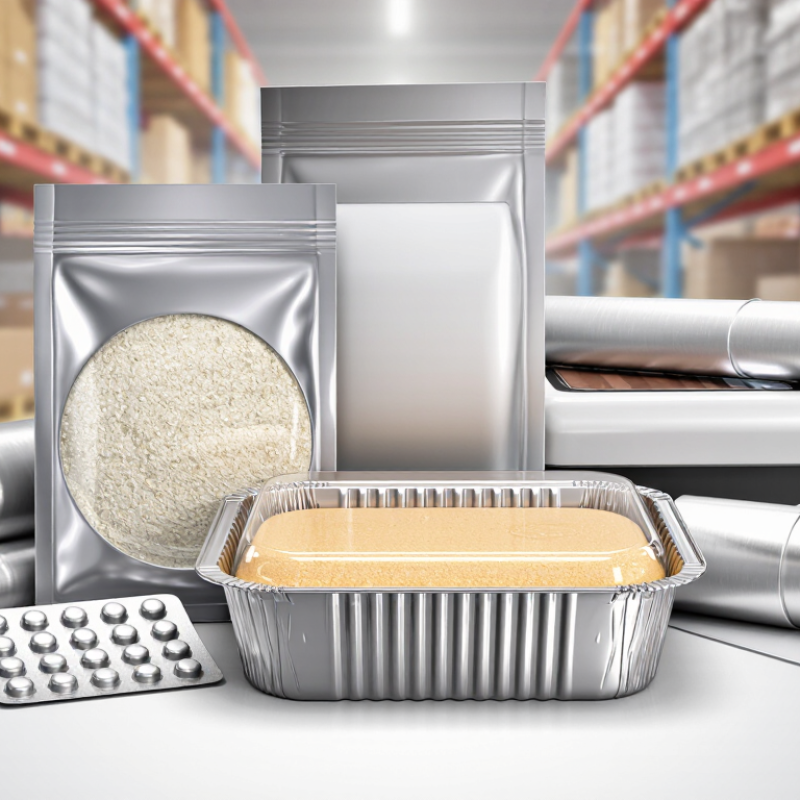
Common formats include foil pouches, lidding foils, sachets, blister packs, and laminated rolls. Each format serves a different purpose. A pouch may protect powdered food from humidity. Lidding foil can seal a yogurt cup tightly. Blister packaging helps separate individual doses and supports clear product counting.
Material selection
Material selection requires more than choosing the thickest foil. Buyers should check alloy, temper, pinholes, seal strength, coating compatibility, and printing performance. A package that looks strong may still fail around a sharp corner. Small sealing defects matter.
In 2026, recyclability and material reduction also influence purchasing decisions. Foil is valuable, but many structures combine it with plastic or paper. These layers improve performance, yet they can complicate recycling. Local collection systems must be reviewed before making environmental claims. This is often overlooked.
Packaging tests should include humidity exposure, compression, drop testing, and seal inspection. Requesting migration data and food-contact documentation is also sensible. Specifications may differ between regions. One universal package rarely fits every market. Practical testing remains more reliable than attractive samples.
Which Aluminium Foil Package Types Are Available to Global Buyers?
Global buyers can choose from several aluminium foil package types, each suited to a different product and filling line. Household rolls offer convenient retail use. Foil trays support ready-to-heat meals and bakery products. Lidding foil seals cups, tubs, and pharmaceutical-free food containers. Stand-up pouches and sachets usually combine foil with plastic films. These laminates improve barrier performance against light, oxygen, moisture, and aroma loss. Blister packs are also available for regulated healthcare products, subject to local compliance requirements.
The material choice affects both performance and cost. European Aluminium reports that packaging uses about 75% of aluminium foil consumed in Europe, showing its strong role in protection and distribution. Smithers’ “The Future of Global Flexible Packaging to 2028” projects flexible packaging demand to exceed 30 million tonnes annually by 2028. That growth supports wider access to foil laminates, rollstock, and preformed pouches. Buyers should check foil thickness, alloy grade, temper, sealant compatibility, and roll dimensions. They should also request migration, food-contact, and recycling documentation where required.
No format is perfect. A high-barrier pouch may reduce material weight, but its mixed layers can complicate recycling. A rigid tray offers easier handling, yet it may increase freight volume.
From practical sourcing experience, packaging trials reveal problems that specifications often miss: weak seals, curling edges, ink adhesion, or poor machine tension. Small pilot runs are worth the delay.
How to Compare Foil Packaging by Product, Barrier, and Shelf-Life Needs
For global buyers, foil packaging should be compared against the product, barrier target, and required shelf life. A dry snack may need protection from oxygen, moisture, and light. A retort pouch faces heat, pressure, and seal stress. A pharmaceutical blister requires tighter control of pinholes and moisture transmission. Product chemistry matters more than foil thickness alone.
The Flexible Packaging Association’s 2024 industry report places U.S. flexible packaging sales near 40 billion dollars in 2023, showing the sector’s broad commercial scale. However, market size does not prove package suitability. Use ASTM F1249 for water-vapor transmission and ASTM D3985 for oxygen transmission. A foil laminate can provide an extremely strong barrier, but one tiny pinhole may weaken real-world performance. Seal quality remains critical.
Shelf-life testing should reflect transport, humidity, temperature changes, and opening habits. FAO reports that about 13.2% of food is lost globally between harvest and retail, although packaging is only one factor. For moisture-sensitive powders, compare foil laminate with metallized film using measured WVTR data. For oily products, check chemical compatibility and seal contamination. I have seen buyers choose thicker foil for reassurance, then overlook weak seals. That decision deserves review. A lighter structure may work, but only after accelerated aging and distribution trials. Perfect barrier claims can become misleading without test conditions.
2026 Best Aluminium Foil Package Types for Global Buyers
Compare typical aluminium foil thickness by package type. Thicker foil can improve puncture resistance and handling performance, while the final barrier and shelf life also depend on laminate structure, seals, filling process, product chemistry, and storage conditions.
Flexible Foil Laminate
Suitable for coffee, snacks, powders, pet food, and other products requiring strong light, oxygen, and moisture protection with low shipping weight.
Blister Lidding Foil
Commonly used for tablets and capsules. It provides strong light and moisture protection when matched with an appropriate forming web and properly sealed.
Foil Tray
A practical choice for ready meals, bakery products, and foodservice applications where rigidity, oven compatibility, and puncture resistance are important.
Foil Sachet Laminate
Designed for single-use powders, sauces, cosmetics, and pharmaceutical products. It offers an efficient barrier-to-material ratio when seal quality is controlled.
Thickness values are typical industry planning ranges in micrometres (μm), not universal specifications. Actual shelf life must be validated through product-specific stability testing and packaging performance testing.
What Standards and Sustainability Factors Should Buyers Check?
2026 Best Aluminium Foil Package Types for Global Buyers?
For global buyers, aluminium foil packaging may include trays, lidding foil, pouches, and roll stock. Each format needs different checks for strength, sealing, and barrier performance. Ask for thickness tolerances, pinhole limits, seal temperature ranges, and batch traceability. A clear certificate of analysis should accompany every shipment. Food-contact compliance must match the destination market, not merely the manufacturing country. Request migration test reports and declarations based on the intended food type, temperature, and storage period. Standards such as ISO 9001 can support quality control, while ISO 14001 may indicate a structured environmental system.
Sustainability requires more than a recycled-content percentage.
Buyers should examine the aluminium source, electricity mix, water use, scrap recovery, and transport distance. A product carbon footprint should explain its boundaries and data sources. Recycled aluminium can reduce impacts, but unsuitable coatings or mixed laminates may complicate recycling. Check whether inks, adhesives, paper, and plastic layers can be separated in real collection systems. Packaging reduction also matters. A thinner foil that tears during filling can create more waste than a slightly heavier specification. Real conditions matter.
Ask suppliers for third-party audit records, corrective-action reports, and current test dates. Be cautious with broad eco-friendly
language. It often hides missing evidence. I would also test samples on the actual filling line, including chilled storage and rough handling. Perfect claims are rare. Procurement teams should record open questions and review them annually. That discipline builds a more reliable decision.